Slow Mo Strike: Knives in Time
KAYAC Inc.Action
4.7209.00 Reviews
- Version
- 017
- Installs
- 5.00M
- Age Rating
- Teen
Screenshots

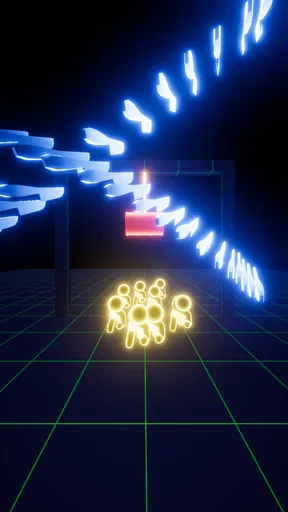
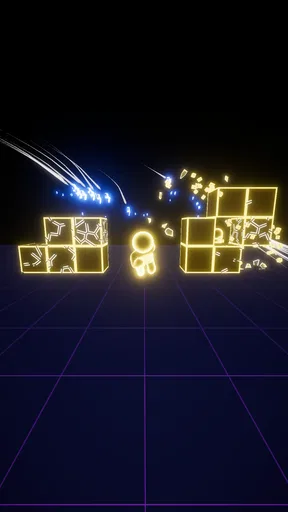

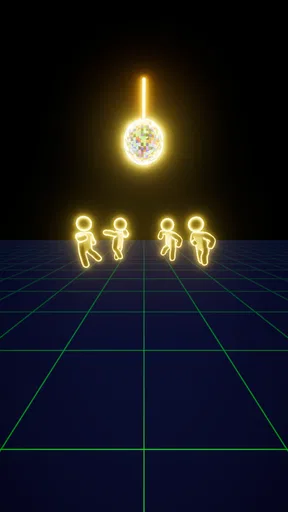
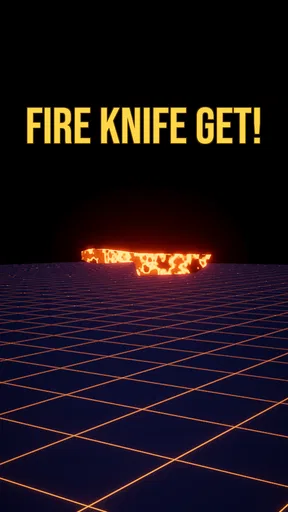

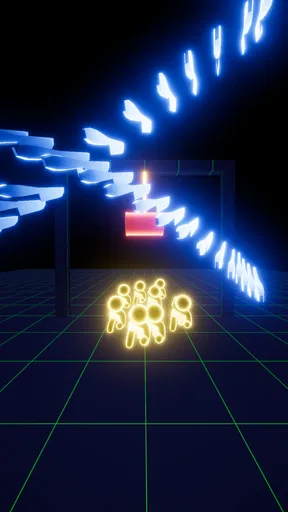
Our Review of Slow Mo Strike: Knives in Time
 Analysis by Appyee
I picked up Slow Mo Strike: Knives in Time expecting a quick action game, and that is exactly what it feels like: a compact test of timing, tracing, and release control. Its central idea is easy to understand. The action slows down while I set up knife paths, then everything resolves in a single burst. That simple rhythm makes it suitable for short sessions, but it also gives the game a sharper learning curve than its minimal presentation might suggest.
Developed by KAYAC Inc., this free action game has already attracted over one million installs and holds a 4.2 average from around 3,800 ratings. Those figures suggest that its quick, instantly readable format has found an audience, although they do not tell the whole story. What matters in play is whether you enjoy preparing a move carefully and then watching the result unfold. If you prefer constant movement, deep character progression, or a large campaign, this is probably not the right kind of action game for you.
How the current version feels in everyday play
The current version is 011, and the experience remains focused on its one defining interaction rather than trying to become a broad action package. I spend the slow-motion phase studying the arrangement, drawing routes for the knives, and deciding how much of the screen I can safely manage before releasing them. The satisfaction comes from the contrast between deliberate planning and sudden execution.
The advertised burst involves all 30 knives, which gives each successful setup a strong sense of completion. I do not experience the game as a traditional reflex-only challenge. The first moment is closer to solving a visual puzzle, while the release is where the action payoff arrives. That combination is what separates it from an ordinary tap-to-attack game.
For a short break, the format works well. I can start a session without remembering a complicated control scheme, and the basic objective is visible almost immediately. It is the kind of game I would open while waiting for a train or taking a brief pause between tasks. The drawback is equally clear: because the concept is so concentrated, people who need a lot of variety may feel that the novelty wears thin sooner than it would in a larger action title.
The control idea is simple, but precision still matters
Tracing a route is not just a decorative gesture. The path I choose affects how confidently I can read the final result, especially when several targets or obstacles compete for attention. I found it useful to slow down during setup instead of drawing quickly just because the game encourages a fast-looking outcome. A neat, intentional route is usually more satisfying than a rushed one that creates confusion when the knives are released.
One practical habit is to look at the whole arrangement before touching the screen. I first identify the most important target, then work outward and leave enough visual space to check the remaining paths. This is a small change in workflow, but it reduces accidental overlaps and makes failures easier to understand. The game rewards planning more than frantic swiping, even though the final animation feels aggressive.
Another useful approach is to treat each attempt as a test of one decision. Instead of trying to improve everything at once, I pay attention to whether the problem came from a poor starting point, an awkward curve, or simply releasing before I had checked the full layout. That mindset makes the action less frustrating and helps the game feel like a skill challenge rather than random trial and error.
Why the slow-motion setup is the real hook
Many action games ask me to react while events are already moving quickly. Here, the pause-like setup changes the source of tension. I have time to think, but that also means mistakes feel more personal because I had an opportunity to inspect the situation. The game creates pressure without needing a complicated combat system: I am responsible for turning a frozen moment into a clean chain of movement.
This makes it appealing to players who enjoy visual planning. It is also a good fit for someone who likes watching a carefully prepared action resolve all at once. The release is not merely the end of a level; it is the moment that confirms whether my drawing made sense. When it works, the result feels earned. When it fails, I generally know which part of my plan needs changing.
There is a trade-off, though. Players who want direct control over a character may find the experience detached. I am not steering a hero through a large environment or adjusting attacks in real time. I am designing a short sequence and then observing it. That distinction is important before downloading it, because the game’s appeal depends heavily on enjoying setup and payoff rather than continuous movement.
What the current release means for new players
Since the game is free and supports devices running Android 5.1 or later, it is accessible to people using a wide range of Android hardware. The Teen content rating is also worth keeping in mind for families deciding whether it matches a younger player’s expectations. I would still judge it by the individual’s comfort with knife-focused action rather than assuming that a simple control scheme makes it suitable for everyone.
The low barrier to entry is one of its strongest qualities. I do not need to study a long tutorial or learn a large set of buttons before understanding the basic loop. A new player can begin by tracing, releasing, and observing the result. The more advanced challenge comes from improving accuracy and planning, not from memorizing a large catalog of abilities.
For someone who wants a game that can be played in small pieces, this is a sensible choice. It does not demand that I reserve a long uninterrupted evening. I can play a few attempts, put it down, and return later without needing to reconstruct a complicated story or inventory. That convenience is more valuable than it may sound, especially for players who mainly use their phone during small gaps in the day.
How I would use it in a normal day
Imagine having ten minutes before an appointment. A large action game may take too long to load mentally, while a competitive match can be inconvenient if I need to leave suddenly. This title fits that moment better. I can make a few deliberate attempts, focus on improving one part of my tracing, and stop without feeling that I abandoned a major objective.
I also think it works as a reset after a demanding task. The slow-motion phase gives me something concrete to inspect, and the release provides immediate feedback. It is not a meditation app, and mistakes can still be irritating, but the narrow loop keeps my attention on one visual problem at a time. That makes it more engaging than passive scrolling without requiring the commitment of a full-length game.
My advice for that kind of session is to avoid chasing speed immediately. First aim for clean routes and reliable results. Once the pattern becomes familiar, faster decisions become easier. Trying to rush before understanding the layout only turns the game’s main strength—controlled planning—into unnecessary frustration.
Where it differs from familiar action alternatives
Compared with endless runners, this game places less emphasis on continuous reflexes and more on reading a scene before acting. A runner keeps asking me to respond to incoming hazards, while this experience gives me a moment to construct the response. If you enjoy the feeling of staying in motion, an endless runner will likely provide more energy and variety.
Compared with physics-based puzzle games, the knife tracing gives the action a more immediate payoff. I am not slowly arranging objects and waiting for a chain reaction to develop over a long sequence. The setup is compact, and the release is the event I am working toward. Someone who prefers elaborate mechanisms may find it too direct, but players who want a fast visual answer may appreciate that focus.
It also differs from character-based action games because there is no need to manage a fighter’s movement in the same way. The important skill is route planning. That makes it easier to pick up, but it also limits the sense of personal expression. I cannot build a distinct combat style through a collection of abilities; my choices are expressed through the paths I draw and the timing of the release.
For that reason, I would choose this over a larger action game when I want a self-contained challenge, not when I want exploration, progression, or a social competition. The right alternative depends on what I want from the session. Slow Mo Strike is strongest when its narrow idea is exactly what I am looking for.
What appears to have evolved, and what that means
The release date is May 14, 2026, and the current version number places the game in an early stage of its product life rather than presenting it as a long-established platform. That matters when judging the experience. I see a focused foundation built around slow-motion planning and a large final burst, not a claim that the game already offers the breadth of a mature action franchise.
For existing players, the current release is best understood as a snapshot of that focused concept. The version number is useful context, but it does not by itself prove that a particular mechanic, balance change, or content expansion has arrived. I would therefore evaluate the game on what is playable now: the clarity of the tracing interaction, the satisfaction of the release, and whether repeating that loop remains enjoyable for me.
That approach also keeps expectations realistic. A newer game can feel fresh because its central idea has not been buried under layers of menus and systems. At the same time, it may leave players wanting more variety after the first excitement fades. I see both sides here. The streamlined structure is a strength during short sessions, but it places a lot of pressure on the core interaction to stay interesting.
Players returning after earlier sessions should pay attention to whether they are enjoying better decisions or merely repeating familiar motions. The game has more staying power when I use each attempt to refine a route, improve my visual reading, or find a cleaner solution. If I am only replaying without learning anything new, the limited format becomes much more noticeable.
Small techniques that make the game more enjoyable
My first technique is to separate target priority from route decoration. I decide what must be reached before worrying about making the line look elegant. This prevents me from spending attention on a visually pleasing trace that does not solve the actual arrangement. Once the essential route is clear, I can refine it without losing sight of the objective.
Second, I leave a short inspection pause before releasing. Even though the game encourages a dramatic one-burst finish, that final check is valuable. I scan from the starting point to the endpoint of each knife path and look for an accidental crossing or an overlooked target. This is especially helpful when I am playing quickly during a spare moment and my first impulse is to release immediately.
Third, I use failed attempts as information about screen reading rather than as a reason to swipe harder or faster. If I cannot explain why a result went wrong, I slow down on the next attempt and simplify my route. That method is more effective than making a completely different drawing without understanding the original mistake.
A fourth insight is that the game can be a useful test of attention switching. I first inspect the entire field, then focus on one route, then return to the whole picture before release. Practicing that sequence helps me avoid tunnel vision. It is a small mental workflow, but it makes the difference between a controlled setup and a collection of disconnected gestures.
The friction points I would consider before installing
The biggest limitation is the narrowness of the loop. The slow-motion knife setup is distinctive, but it cannot satisfy every action player. If I want a long campaign, a wide range of weapons, character upgrades, or a world to explore, I should look elsewhere. This is a specialist pick for a specific kind of short-form challenge.
The game may also frustrate players who dislike planning mistakes. Because I have time to examine the scene, an error can feel less like bad luck and more like poor judgment. That can be motivating for people who enjoy improving their technique, but it can feel unforgiving to someone who wants an action game that rewards rapid improvisation.
Its free price makes trying it easy, yet free access alone does not guarantee that it will become a long-term favorite. I would install it for the unusual interaction, not simply because it costs nothing. The Teen rating should also be considered by anyone choosing games for a younger household, since the knife-centered theme may not suit every player.
There is another practical trade-off: the more carefully I play, the more the experience resembles a puzzle with an action finish. That is a positive if I like precision, but a weakness if I expect the screen to stay lively throughout the entire attempt. The game’s excitement is concentrated at the release, while the setup asks for patience.
What I would watch as the game develops
With the current version at 011 and the release still relatively recent, I would watch how the developer handles variety without weakening the central idea. New situations would be valuable if they encouraged different tracing decisions rather than simply adding visual noise. The best direction would preserve the clean relationship between planning and release while giving experienced players fresh reasons to reconsider their usual routes.
I would also watch whether the game continues to respect short-session play. Its appeal comes partly from being easy to understand and quick to revisit. If future changes make the experience feel overloaded with interruptions or unnecessary layers, they could undermine the quality that makes it approachable. On the other hand, thoughtful additions could give returning players more depth without making the first attempt intimidating.
For now, I would not buy it for a promised future. I would download it because the present concept works for me: draw carefully, release confidently, and learn from the result. That is a solid basis for a free mobile action game, even if it is not a substitute for a full-scale adventure or competitive title.
My final recommendation is straightforward. Try it if you enjoy visual planning, precise touch controls, and the satisfaction of seeing one prepared action resolve in a dramatic burst. Skip it if you need constant movement, extensive progression, or a broad collection of combat systems. In my experience, Slow Mo Strike: Knives in Time succeeds by staying focused. Its best quality is also its main limitation, and knowing that before you start will tell you whether this compact action game belongs on your phone.
Privacy and Permissions
See what permissions an app requests and how it handles your data.
- Wi-Fi connection information
- view Wi-Fi connections
- Other
- view network connections, full network access, control vibration, prevent device from sleeping
Verdict
Strengths of Slow Mo Strike: Knives in Time
- Simple controls make it easy to start playing immediately.
- Slow-motion timing adds a satisfying sense of precision.
- Short rounds suit quick gaming sessions.
- Knife designs and effects give the visuals some variety.
- Offline play is useful when you have no internet connection.
Limitations of Slow Mo Strike: Knives in Time
- Gameplay can become repetitive after extended play.
- Precision challenges may feel frustrating on smaller screens.
- Ad interruptions may affect the pace of some sessions.
- Progression may feel limited for players seeking deeper mechanics.
- Sound and vibration effects can become distracting over time.
Other Releases by KAYAC Inc.
View All
Ball Run 2048: merge number
Casual4.1

Number Master: Run and merge
Action4.4

Type Spin: alphabet run game
Racing4.5

Draw Action: Freestyle Fight
Action4.3
Similar Picks in This Category
View All
Temple Run 2: Endless Escape
Imangi Studios4.1

PUBG MOBILE
Level Infinite4.3

Free Fire: 9th Anniversary
GARENA INTERNATIONAL I4.4

Talking Tom: Hero Dash Run
Outfit7 Limited4.3

slither.io
Lowtech Studios3.9

Sniper 3D:Gun Shooting Games
Wildlife Studios4.6
Frequently Asked Questions
What is Slow Mo Strike: Knives in Time?
Slow Mo Strike: Knives in Time is an action-focused mobile game built around precise timing, slow-motion effects, and knife-throwing challenges. You generally need to aim carefully, launch knives at the right moment, and avoid obstacles or failed hits as the stages become more demanding. Its short levels make it suitable for quick sessions, while the increasing difficulty encourages repeated attempts to improve your accuracy and reactions.
How do you play Slow Mo Strike: Knives in Time?
The main gameplay is based on timing your knife throws rather than simply tapping as quickly as possible. During each challenge, you watch the target and surrounding hazards, activate or use the slow-motion sequence when appropriate, and release the knife toward the correct point. Successful hits let you progress, while mistimed throws can end a run or require you to restart the level.
Is Slow Mo Strike: Knives in Time free to download?
The game is generally offered as a free download, although availability and pricing can vary depending on whether you use Android or iOS and which country your store account is registered in. Like many free mobile games, it may include advertising, optional purchases, or both. Before installing, check the official store listing for current information about in-app purchases and any paid items.
Can Slow Mo Strike: Knives in Time be played offline?
Some basic levels may work without a continuous internet connection, which is useful when you want to play during travel or in areas with weak reception. However, advertisements, online rewards, updates, analytics, and certain features may require connectivity. For the most reliable experience, launch the game while connected at least once and consult the store description or in-game notices for the latest offline limitations.
Is Slow Mo Strike: Knives in Time suitable for children?
The game is easy to understand, but parents should still review its age rating and content before allowing younger children to play. The knife-themed action is presented in an arcade-style format rather than as realistic violence, yet repeated attempts, advertisements, and optional purchases may affect the experience. It is also worth checking device parental controls and purchase restrictions before installation.
Play our best games!


